
There comes a time when we can’t abide another piece of sushi or another plate of pasta. We don’t want pizza and a steak just won’t do. Instead, we need something refreshing, something exciting. Jewish and Middle Eastern cuisine fills a need for us.
414 Dupont St, Toronto
It delights our imagination, fills our hearts with a yearning for distant lands that feel beyond our reach with dishes rich in both history and flavour. It’s a cuisine full of exotic and exciting flavours, combinations that refresh our joy for food. Fat Pasha certainly fills this need for us in a trendy, comfortable setting. It doesn’t hurt that it’s located on slowly revitalizing Dupont Street, deep in the Western Annex, one of our favourite Toronto neighbourhoods near our Toronto home base.
After our visit, we were informed of the halo of trendy popularity of both the chef behind Fat Pasha and the restaurant itself. However, we must confess to dining there innocent of those reputations; we just popped in to satisfy a craving and a long-standing desire to try them out. Despite warmly embracing the label “foodie” we aren’t too concerned with trends and reputation. We’re concerned more with allowing our hearts and stomachs to lead us to delicious food.
This is an ideal dining experience to enjoy with a group of friends; seating for about 40 gives it an intimate feel while allowing a lively buzz to fill the room. The decor provides a feeling of space in a place where tables are a bit snug. A long counter for diners allows them to squeeze in a few extra bodies. Awesome psychedelic posters scattered about the walls attract your wandering attention when it feels rude to reach for your phone. In our opinion, it’s not the best choice for a romantic date night (leastwise not how we think of those) or a private conversation, but it’s great when you need a dose of social energy with your meal.
Staff are friendly and attentive but can get caught with the energy of the place, so you might have to be a bit assertive in getting their attention when it’s hopping. If that’s something that bothers you we recommend visiting during an earlier, less busy, seating. Our waitress was casual, straightforward with an easy-going air. Online reviews do mention that the staff may at times overestimate how much people can eat (that was certainly true for our visit), so you might want to order a bit less at first and see where you land. Remember – you can always order more!
The Food
Cookbook lovers will be reminded of Yotam Ottolenghi’s recipes, as Matthew Sherrwood points out in his Globe and Mail review of Fat Pasha. As fans of Ottolenghi’s books ourselves, it was thrilling to experience such food prepared with the deft touch of a chef rather than our own humble – but always careful and sincere – attempts.
We feel this place is best enjoyed with a group of four to six people. The dishes are intended for sharing, and some are quite large and hearty. Their famous roasted cauliflower alone would have been enough to contentedly feed two people. With so much on offer it’s hard to fight the impulse to over order. Eating with a group would allow for a fuller exploration of the menu. The three of us had ordered four dishes and were ready to lapse into a food coma by the end of our meal. We could have probably done with three dishes and a shared dessert. Sadly we couldn’t have had a wafer-thin sweet by the end of our meal, and from our observations of other tables (yes, we’re food voyeurs too) these were worth saving room for.
Fortunately, dishes came out one at a time, at a leisurely pace. Given the richness of the food the extra time was needed to digest a little before we could attack another dish. This also adds to the social atmosphere of the place, making it a great meal over which friends can indulge in banter and laughter as much as in the food.
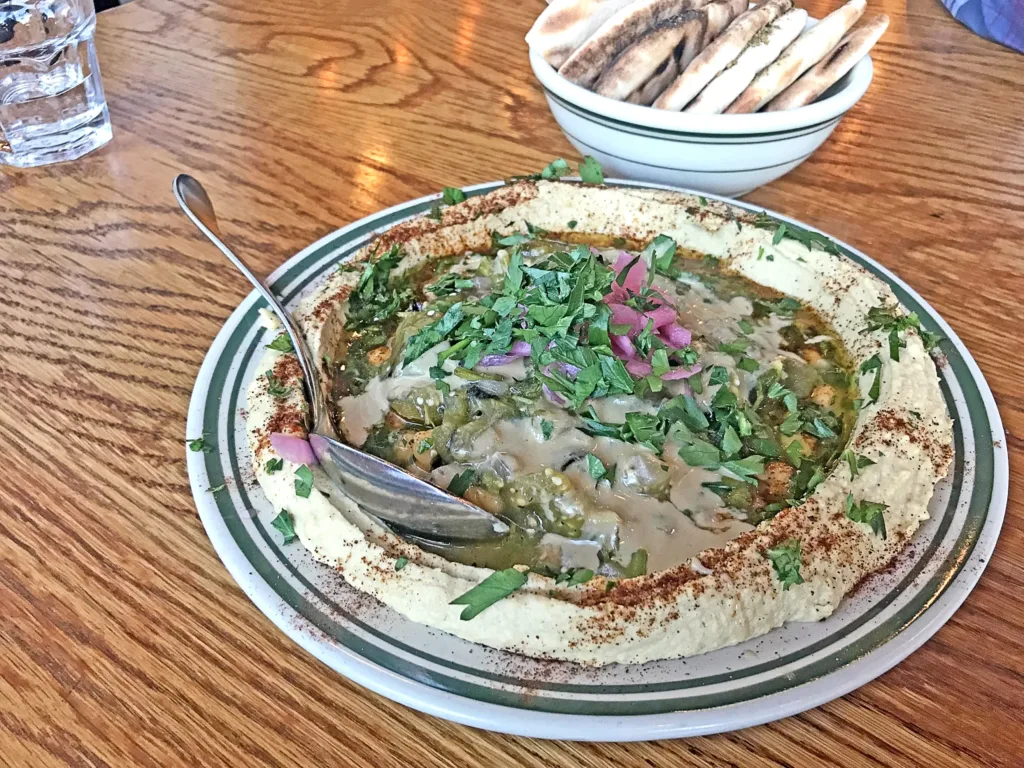
Hummus: Our waitress let us know their hummus has a great reputation, which pretty much guaranteed we had to try it. They make an extremely creamy hummus, which is achieved by painstakingly removing the husk of each chickpea. We did this once at home and, while the end result was amazing, it was never to be repeated again – it was just too much work. So hats off to Fat Pasha for going the extra mile! The hummus itself was spread out to form a bit of a rim, holding in a generous pool of extra virgin olive oil and a thin tahini sauce, with lots of stewed tomatillo, pickled onions, whole chickpeas, fresh flavourful parsley topped with a dusting of earthy paprika. This dish could make a meal all on its own for two people with modest appetites; there’s so much going on here! We were quite humbled by the flavours and creativity, and it has encouraged us to be more creative with our hummus at home.

Duck Schmaltz Latkes – Latkes are a classic Hanukkah dish dating as far back as the 1800’s, but the popularity of potato pancakes has made them a staple of many Eastern European kitchens – including Anyes’ Polish household. These lived up to the high standards of childhood, comfort food memories, with much of that success being owed to frying them in duck schmaltz.
Schmaltz is rendered fat (usually poultry) used for frying and is a substitute for frying in butter when preparing kosher meals. These latkes were thicker than we’re accustomed to having, which actually made for a lovely consistency.
Frying them in duck schmaltz provided an amazing caramelized and crispy outside, with soft creamy potato inside. Served on the side was a homemade applesauce spiced like an apple pie, and a big dollop of sour cream. To be honest, the latkes were so lovely on their own, we passed on both of these sides.

Chicken Kabab – This was a daily special when we were visiting. By the time it arrived we weren’t certain we could eat another bite, and were grateful for the smaller portion. Big cubes of chicken breast were tender and juicy, a small miracle on a kabob. The kabab itself was served with a lovely tzatziki-like yogurt sauce and accompanied by sectioned tomatoes drizzled with dill and parsley oil – just lovely.

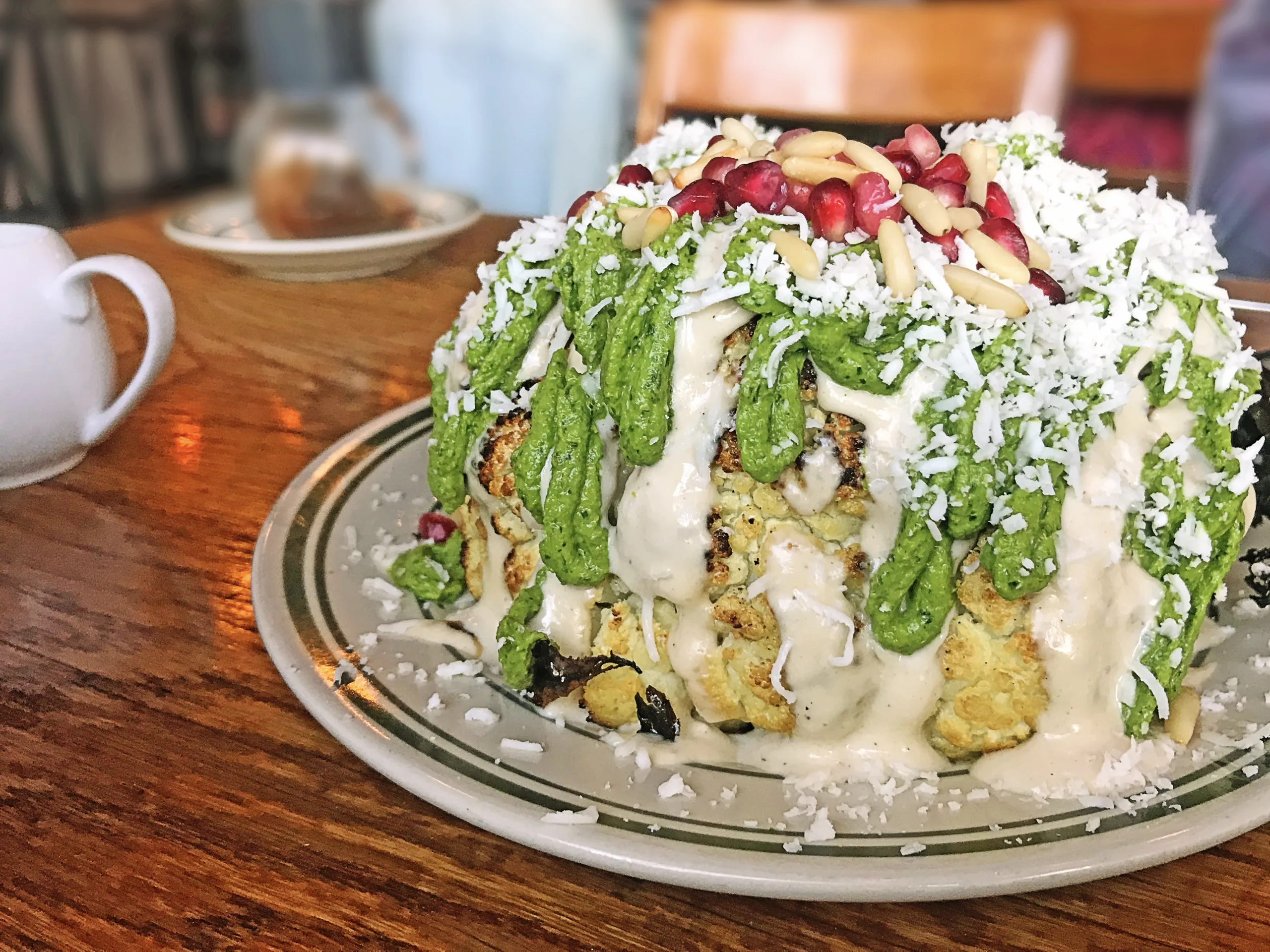
Roasted Cauliflower: This is one of their most famous dishes, and when we saw the neighbouring table dig in, it just had to happen. It is a marvelous sight to behold, like a birthday cake made entirely of a single veggie!
The cauliflower is roasted enough to give it a delicious flavour without being cooked to mush. Tahini and skhug were layered over top like gorgeous icing. Tahini, for the uninitiated, is made from ground sesame seeds. Skhug can be found in Arabic, Persian and Hebrew cuisine. Its origins hail from Yemen (at least according to the new sage of our hyper-connected age: Wikipedia) and it is normally a hot sauce made from cilantro and cumin (with a variety of other spices depending on the region and who’s doing the cooking). The version of Skhug we enjoyed at Fat Pasha had no heat to it at all but was bursting with flavour from their spice mix. The world’s best buttery pine nuts were scattered on top, adding some texture to each bite.
A grating of Halloumi provided a nice salty kick. Like jewels on a crown, pomegranate seeds are sprinkled on top, their sweet-tart crispness cutting through the earthier flavours and richness of the tahini and skhug. We’ve never had anything quite like it! It was a marvellous dance of flavours.
More Ways to Savour Life

International Restaurants

We love to travel and are always excited to share our favourite food finds.
Culinary Creators

A curated collection of mouth-watering Instagram accounts and recipe blogs from passionate food creators around the world.
Find this content enjoyable and useful? Buy us a coffee!
Explore More
Lettuce Dine

These New York food spotters and cooks love their food! They share their favourites in international cuisine and some of their home cooking.
Food and Drink Destinations

They travel the world seeking experiences to create culinary travel guides. Explore tips for global dining, and learn how to bring those flavours home for simple and enjoyable meals.
50 Best Restaurants

Move over Michelin. The World’s 50 Best Restaurants has been our most reliable source for “next level” dining experiences. With over 1,000 experts, it’s a barometer for trends, showcasing top culinary destinations and honouring culinary excellence.